
Subway Runner: Parkour Game
Happy Go GameArcade
4.076.00 Reviews
- Version
- 1.7.4
- Installs
- 10.00M
- Age Rating
- Everyone
Screenshots
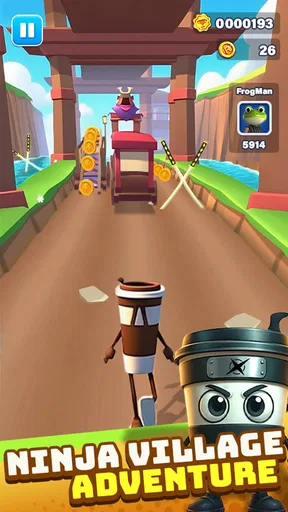
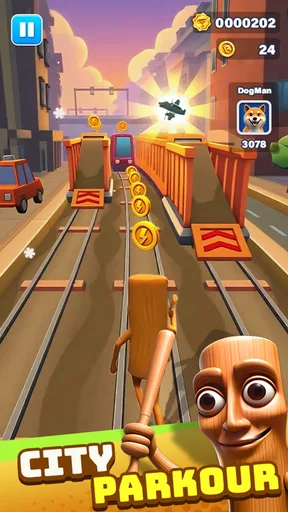
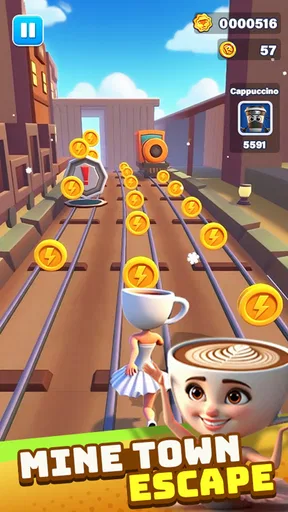
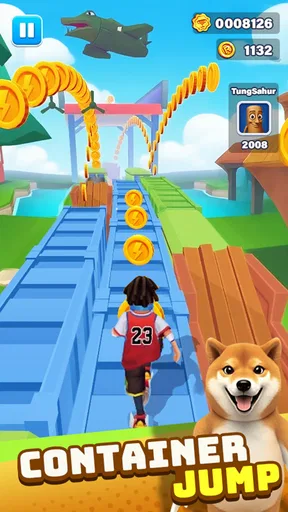
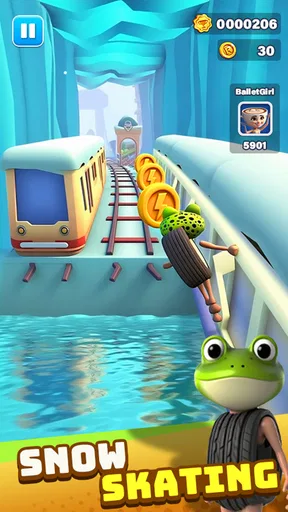
Our Review of Subway Runner: Parkour Game
 Analysis by Appyee
I approached Subway Runner: Parkour Game expecting a quick arcade distraction, and that is exactly where it works best. It puts me in a constant forward run through subway routes, asks me to react to hazards, and adds jet-plane unlocking as a longer-term reason to keep playing. The idea is familiar, but the appeal comes from how quickly a session starts and how little preparation it demands.
My overall view is positive but measured: this is a convenient reflex game for short breaks, not a deep action experience. The free entry point makes it easy to try, while the simple controls keep the first few runs approachable. At the same time, players who need a large amount of variety, a strong story, or a more demanding progression system may find the format too limited.
What the running actually feels like
The central loop is easy to understand. I move through subway environments, avoid trains and other obstacles, and try to stay alive long enough to improve a run. That simplicity is important because it lets the game fit naturally into spare moments: I can play while waiting for an appointment, during a short commute break, or when I want something more active than scrolling but less involved than a full-length game.
The best part is the immediate pressure. A run does not require a lengthy tutorial or a complicated setup before the interesting part begins. I am watching the track ahead, judging the next movement, and trying not to react too late. The game therefore depends more on attention and timing than on a large collection of systems. When a run ends, I usually understand why: I mistimed a move, failed to notice an approaching train, or became too comfortable with the rhythm.
That clarity gives the arcade design a useful sense of fairness. Even when the result is disappointing, the failure encourages another attempt instead of leaving me confused about what happened. It also makes the game suitable for players who enjoy chasing personal improvement. The satisfaction is not necessarily from discovering a new story beat; it comes from lasting longer, responding faster, and making fewer careless decisions.
The subway setting supports that loop well. Trains naturally create urgency, and the straight-ahead movement keeps the visual focus where it needs to be. I do not have to divide my attention between exploration and combat. The game’s main question remains consistent: can I read the route quickly enough to keep moving?
Why the jet-plane objective changes the routine
The promise of unlocking jet planes gives the runs a goal beyond simply surviving the next obstacle. That matters because endless arcade movement can otherwise feel disposable. Even a small unlock target can make me think about returning later, especially when I am close to earning something new.
I found this kind of objective most useful when I treated it as a reason to play in short, focused bursts. Instead of expecting every session to deliver a major change, I could use each run to improve my reactions and gradually work toward the next unlock. That approach suits the game better than demanding a dramatic progression system from it.
There is also a practical trade-off here. Unlock goals can add direction, but they do not automatically create deep variety. If the underlying run structure remains familiar for too long, a new vehicle or destination may feel like a reward for repetition rather than a complete change in how the game plays. Players should therefore see the planes as motivation within the arcade loop, not as evidence that this is a broad simulation or a large adventure.
Small habits that make runs more consistent
My first useful adjustment was to stop staring only at the immediate obstacle. Looking slightly farther along the track gives me more time to prepare, particularly when the route begins to feel faster or more crowded. This sounds obvious, but it is the difference between reacting to danger and anticipating it.
I also found it better to avoid frantic movements. A panicked response can solve the obstacle directly ahead while putting me in a worse position for the next one. A calmer rhythm helps me preserve control, especially when I am already several moments into a successful run and do not want to throw it away through an unnecessary correction.
Another practical tip is to use short sessions when concentration drops. Because the game is built around quick attempts, continuing while distracted rarely feels productive. If I am playing while tired or checking something else at the same time, the subway hazards become harder to read and the result feels less like a genuine test of skill. Stopping after a few unfocused attempts is often better than treating every failure as a reason to keep tapping.
These habits reveal the game’s strongest hidden quality: it rewards attention management as much as raw speed. A player with excellent reflexes can still lose by looking in the wrong place, while a more patient player can improve by reading the route and choosing controlled movements.
Where the free model fits—and where it may irritate
The game is free to download and play, which makes the decision to try it straightforward. Its age rating is Everyone, so it is positioned as an accessible arcade option rather than a mature or complicated title. The developer is Happy Go Game, and the current release is version 1.7.4, running on devices with Android 7.0 or later.
There are in-app purchases priced from $0.49 to $0.99 per item. Those small amounts may be acceptable to players who want to support the game or obtain something sooner, but I would still advise treating them as optional rather than assuming they are necessary for enjoyment. The core appeal is the run itself, and the game is most convincing when I focus on improving play rather than spending to shorten the wait for progress.
The main friction with this model is psychological rather than financial. Once a game introduces unlockable rewards, I naturally start wondering whether I am progressing at a comfortable pace or being encouraged to buy convenience. For someone who enjoys earning everything through repeated play, that can become distracting. For someone who is happy to play casually and ignore optional offers, the free structure is easier to live with.
I would also keep an eye on device compatibility before installing. The Android requirement is not especially demanding, but players using older software should check that their phone or tablet meets the minimum version. That is a simple step, yet it avoids the frustration of expecting a quick arcade game to work on hardware that the current release does not support.
How it compares with familiar endless runners
Subway Runner: Parkour Game belongs to a crowded style of mobile arcade game. Players who already know endless runners will recognize the basic appeal immediately: movement continues, obstacles demand quick decisions, and another attempt is always close at hand. Its distinction is not that it reinvents the format. Instead, it combines the subway chase with a jet-plane unlocking objective and keeps the experience focused on quick reactions.
Compared with a more elaborate runner, this game is easier to pick up but may offer less to study over a long period. A larger alternative might provide more characters, missions, environments, or layered upgrades. That can be better for players who want a long-term hobby with many parallel goals. I would choose this title instead when I want the cleaner experience of opening a game and getting into a run without learning a large progression tree.
It is also a different choice from puzzle arcade games. Puzzle titles usually give me time to plan, while this one turns planning into a split-second activity. If I am looking for a calm game to play while listening to a podcast, a slower puzzle may be a better match. If I want to wake up my attention for a few minutes, the forward-running format is more effective.
Likewise, it will not replace a full action game for players who want combat depth or character development. The subway run is the point, not a gateway to a large narrative. That narrow focus is a strength for convenience and a weakness for variety.
Who will get the most from it
I think the best audience is someone who likes arcade games with immediate controls and repeatable challenges. It suits players who enjoy trying to beat their previous performance, families looking for an accessible game with an Everyone rating, and anyone who wants a free title for brief sessions. The jet-plane objective is particularly useful for players who need a small reward target to make repeated runs feel purposeful.
A realistic everyday use case is a ten-minute wait before a meeting. I can start a run quickly, play without committing to a long mission, and stop after a failure or a satisfying attempt. The game’s structure does not punish me for leaving after a short session in the way a story-driven game might. That makes it a practical spare-time choice rather than something that demands a dedicated evening.
It can also work for younger or less experienced players because the premise is easy to understand. However, accessible does not mean effortless. The challenge comes from maintaining attention and learning the timing, so a new player may need several attempts before the movement feels natural. I would introduce it as a simple game with a skill curve, not as something guaranteed to be relaxing.
I would tell competitive-minded players to try it if they enjoy self-imposed goals, but I would not promise an esports-style experience. The appeal is personal improvement and repeat play. Someone who needs ranked competition, extensive multiplayer interaction, or a constantly changing set of objectives should look toward a different arcade option.
Who should probably skip it
I would skip this game if I already know that endless running quickly becomes repetitive for me. The subway setting and plane unlocks provide a useful frame, but they do not change the fact that the main activity is repeated obstacle avoidance. If I need a strong story, meaningful exploration, or a wide range of play styles, this is unlikely to hold my attention for long.
I would also be cautious if optional purchases tend to reduce my enjoyment. Even modestly priced items can make a free game feel less comfortable when I would rather earn every reward naturally. In that case, a paid arcade game with a clearly defined purchase model might be a better fit, provided its design matches what I want.
Finally, players who prefer slower controls may find the constant forward movement stressful rather than entertaining. The game asks for quick visual decisions, and that is central to its identity. It is not the right choice when I want to play at my own calm pace or pause frequently to think.
My final take after repeated short sessions
The strongest reason to try it is its low commitment: it turns a spare few minutes into a clear reflex challenge without demanding a complicated setup. I like the direct subway-running premise, the satisfaction of recovering from a near mistake, and the extra motivation provided by jet-plane unlocks. The free price also lowers the risk of experimenting with it.
Its limitations are just as clear. The format is familiar, the long-term variety may not satisfy players seeking a richer game, and optional purchases can be a distraction for anyone who dislikes monetized progression. Those are not deal-breakers for me, but they define the kind of recommendation I can make honestly.
With an average rating of 4.0 from around thirteen thousand ratings and more than ten million installs, it has found a substantial audience for this straightforward style of mobile arcade play. I would not choose it as my only game, but I would keep it available for short breaks and quick attempts at improving my timing.
In the end, Subway Runner: Parkour Game is best understood as a focused, accessible runner rather than a complete arcade collection. If you want fast subway dodging, simple goals, and a free way to fill small gaps in the day, I think it is worth trying. If you need deep progression or constant novelty, I would point you toward a more feature-heavy alternative instead.
Verdict
Strengths of Subway Runner: Parkour Game
- Fast-paced levels make short play sessions enjoyable.
- Simple controls are easy for beginners to learn.
- Parkour movement gives the game a lively, energetic feel.
- Collectible rewards provide extra motivation to keep playing.
- Bright visuals and quick animations suit casual mobile gaming.
Limitations of Subway Runner: Parkour Game
- Frequent ads may interrupt gameplay, especially after completed runs.
- Progress can feel repetitive once familiar obstacles are mastered.
- Some upgrades may require considerable time or in-app purchases.
- Precision jumps can feel inconsistent on smaller phone screens.
- The game may consume noticeable battery during longer sessions.
Other Releases by Happy Go Game
View All
Magic Piano:EDM Music game
Music3.9

Antistress Games: Calm&Relax
Arcade4.3
Similar Picks in This Category
View All
Subway Surfers
SYBO Games4.6

Stickman Party 234 MiniGames
PlayMax Game Studio4.6

Subway Princess Runner
Ivy4.4

Temple Run
Imangi Studios4.2

Zombie Tsunami
Mobigame SAS4.6

Stack Ball - Crash Platforms
CASUAL AZUR GAMES4.5
Frequently Asked Questions
What is Subway Runner: Parkour Game?
Subway Runner: Parkour Game is an endless running title in which you guide a character through subway and urban-style environments while avoiding obstacles, collecting items, and trying to achieve a high score. The gameplay focuses on quick reactions, lane changes, jumping, and sliding. It is designed for short sessions, making it suitable for casual play when you want something fast and easy to start.
How do you play Subway Runner: Parkour Game?
The controls are generally simple and built around swiping or tapping, depending on the device and version. You move between lanes, jump over barriers, slide under obstacles, and collect coins or other bonuses while the character runs automatically. The speed and difficulty can increase as you progress, so success depends on anticipating hazards rather than reacting at the last possible moment.
Does Subway Runner: Parkour Game work offline?
The main running gameplay may be available without a constant internet connection, which is convenient for travel or areas with limited service. However, certain features can require internet access, including advertisements, online rankings, cloud-related functions, updates, or optional purchases. Availability may differ between Android and iOS versions, so it is worth checking the store listing and testing the game after installation.
Is Subway Runner: Parkour Game free to download?
Subway Runner: Parkour Game is typically offered as a free download, allowing players to try the core experience without paying upfront. Like many free mobile games, it may include advertising, optional in-app purchases, or paid items that can speed up progress or provide extra advantages. Before downloading, review the store page for the current pricing model and use device purchase restrictions if children will play.
Is Subway Runner: Parkour Game suitable for children?
The game is generally easy to understand because it uses colorful visuals, straightforward objectives, and simple touch controls. Its fast pace can be enjoyable for younger players, although repeated advertisements, optional purchases, or competitive score systems may be worth monitoring. Parents should check the age rating for their region, review privacy permissions, and enable parental controls to prevent unintended purchases.
Play our best games!


